Horizontal separators for the separation of solids and liquids
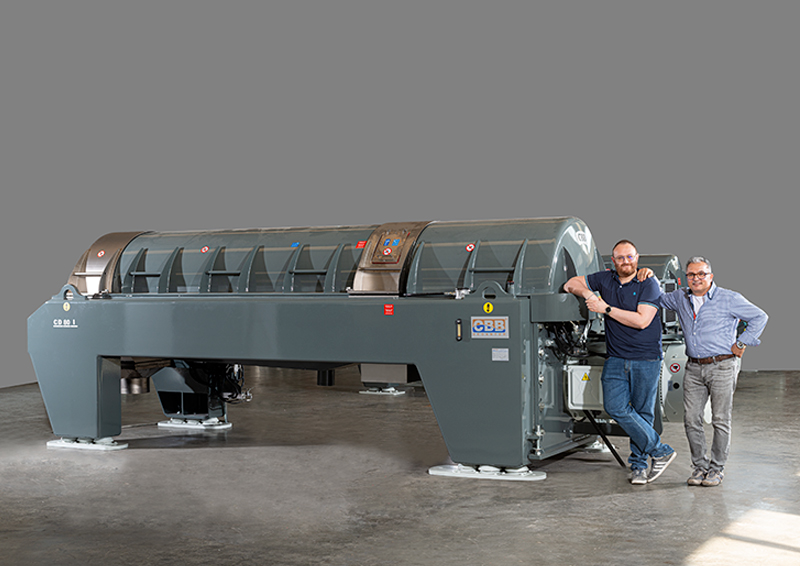
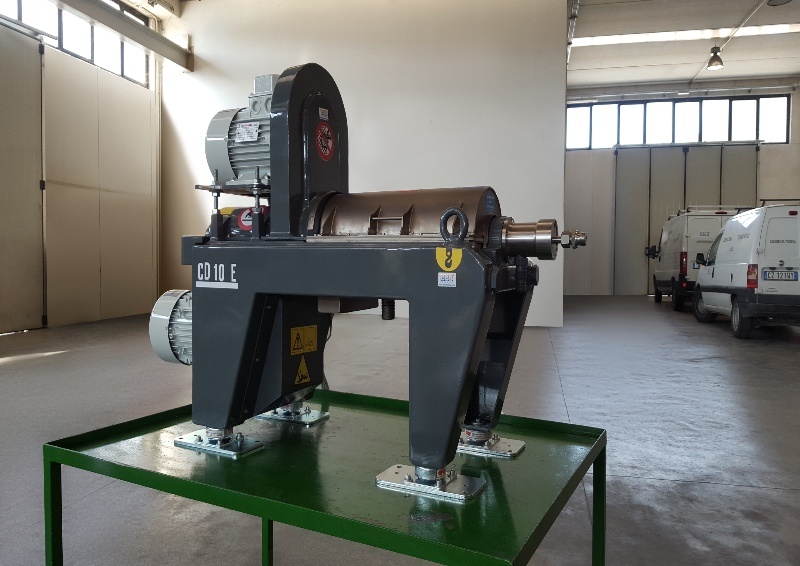
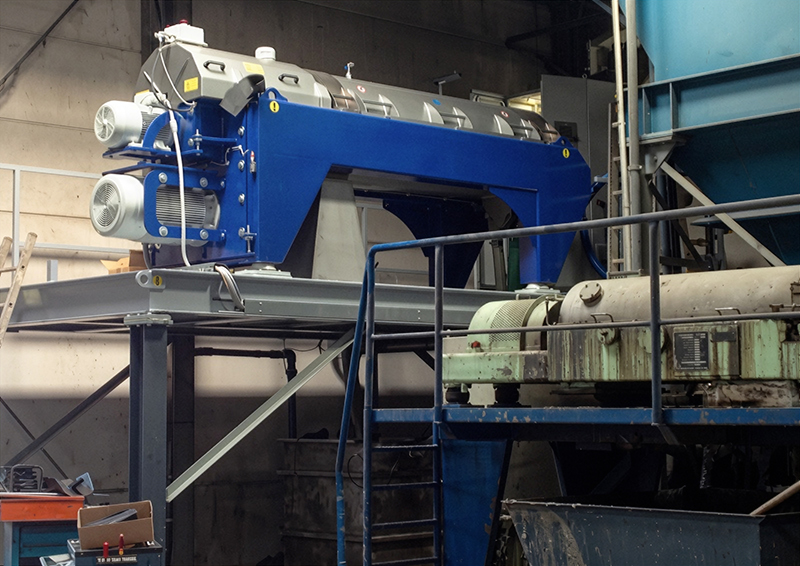
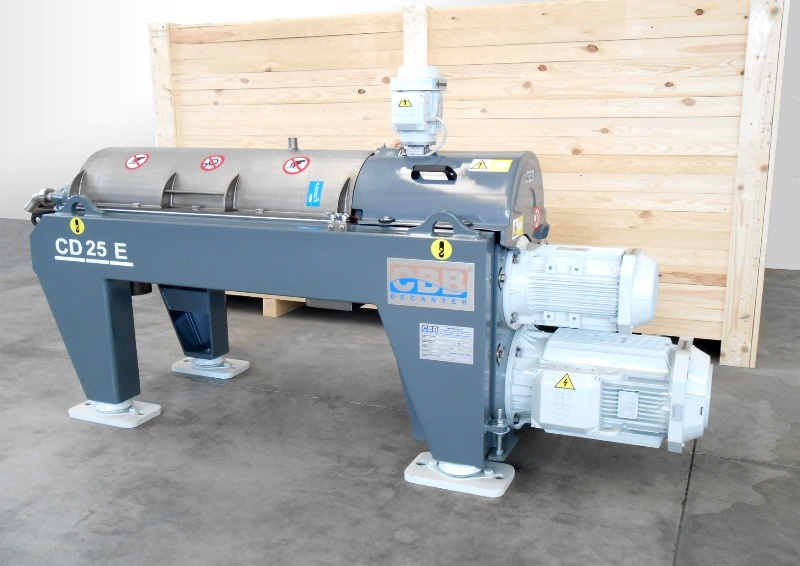
CBB Decanter centrifuges are machines designed for the two-phase and three-phase separation of civil, industrial, and food products. Compared to traditional clarification tanks, they exploit centrifugal force to accelerate the process: acceleration can reach values between 3,000 and 5,000 g, compared to a single g with gravitational sedimentation. The work cycle is entirely managed by the DPC (Decanter Process Controller), a dedicated electronic system that optimizes separation and adapts the process to the specific needs of each application.
CBB Decanter Centrifuge Types
CBB Decanter Series
Scopri il funzionamento della centrifuga Discover how the CBB Decanter centrifuge operates: from hydraulic transmission to dual electric motor system, designed to guarantee maximum efficiency, reliability and high performance in separation and dewatering processes.
FIXED SPEED TRAMSMISSION SERIES
Maximum efficiency, single electric motor, and long-term consistent performance. Application type: Quarries, for consistent sludge with high solids content.
VARIABLE SPEED TRANSMISSION WITH DOUBLE ELECTRIC MOTOR SERIES
Flexibility with automatic differential speed adjustment. Application type: for variable sludge with medium solids concentration.
HYBRID HYDRAULIC SYSTEM TRANSMISSION SERIES
Maximum flexibility with automatic differential speed adjustment and high energy recovery. Application type: for variable sludge with high solids concentration.
Decanter Centrifuge Geometry
SIZES VARIABLE FOR EVERY NEED
Bowl sizes are available with diameters ranging from 100 to 800 mm.
ADAPTABLE BOWL GEOMETRY
Variable inclination at 8°, 11°, and 15° depending on the product to be treated.
Separation Process Optimization
LIQUID SEPARATION PHASES
Multiple clarification stages for the discharged liquid: 2 or 3-phase configurations depending on the required purity standards.
TECHNOLOGY FOR MAXIMUM EFFICIENCY
Our advanced electronics are designed to optimize both power consumption and separation process performance.
95%
Reduction impurities
for a top-notch clarified product
30%
Increased yield
compared to static clarification
35%
Less vibrations
thanks to dynamic balancing
CBB Bowl: Tailored Geometry for Optimal Performance
The bowl is the core component of the decanter centrifuge: using high centrifugal forces within a cylindrical-conical shell to separate solids from liquids. Its length, diameter, and cone angle are custom-engineered for each specific application, optimizing both the clarification zone and the transport of solids toward the discharge area.
CBB Screw: Designs for Every Process Requirement
The decanter screw transports the solids deposited on the bowl wall by centrifugal force toward the conical end at a defined, controlled differential speed. This parameter determines the retention time of the solids inside the rotor and directly impacts the achievable dry solid content. CBB screws are available in various configurations to adapt precisely to product characteristics and process requirements.
CBB Differential Speed: Continuous Adjustment
The differential speed between the bowl and the screw regulates the retention time and compaction of solids, determining the final dry solid content. In CBB decanter centrifuges, this adjustment is fully automated thanks to the DPC system combined with the electro-hydraulic drive, ensuring optimal separation results even with product characteristics that vary over time.
CBB Decanters: High Separation Efficiency
Achieving the right retention time for the process fluid in the clarification and drying zones is key to separation efficiency. This adjustment is managed via weir plates (also known as ‘levels’), optimizing separation according to the requirements of the specific process.
Centrifugal efficiency for every industrial process
CBB decanter centrifuges efficiently separates two or three phases from municipal, industrial, and food products. Centrifugal force, up to 5,000 times stronger than gravity, accelerates separation times and guarantees significantly superior performance compared to traditional clarification systems.
High efficiency
Separation of civil, industrial and food products into two or three phases.
Up to 5,000 g
Centrifugal force up to 5,000 g for faster, more precise and efficient processes.
DPC Card
It monitors and interacts in real time with the entire sludge dewatering process.
Assistance
Dedicated and timely technical support, including remote assistance.
The Advantages of Centrifugal Separation
Why Choose Us - Centrifugal Decanters
Choosing CBB Decanter means relying on a team of professionals who have been ensuring high performance and continuity in industrial centrifugal separation processes for over 20 years. Our experience in sludge treatment and industrial applications allows us to offer robust, efficient solutions tailored to the specific needs of your plants. Each decanter is designed to maximize performance, reliability, and control, ensuring a stable and optimized process over time.
Highly efficient separation of complex materials
Reduction of operating costs and volumes to be disposed of
Continuous and reliable 24/7 operation with minimal supervision
Recovery of materials and valorization of by-products
Optimization of digestate management and cost reduction
Reduced maintenance thanks to the use of quality materials
Our accessories
Integrated solutions for every stage of the process
CBB Decanter accessories complement and enhance separation systems, offering dedicated tools for polymer preparation, solid phase management, and dewatered sludge transport. Polymer stations, augers, and hoppers are designed to integrate with the decanters and ensure continuity, efficiency, and control in any system configuration.
An industrial decanter centrifuge is a machine designed to separate solids and liquids by exploiting the centrifugal force generated by the high-speed rotation of the bowl. Specifically, this technology allows for the continuous processing of large flow rates, improving process efficiency, the quality of the clarified liquid, and waste management. Compared to traditional systems such as filtration or sedimentation, centrifugation reduces process times and operating costs.
The material is introduced into a rotating cylindrical-conical drum. Centrifugal force pushes the solid particles toward the wall, while the liquid phase remains further inside. An internal screw rotates at a differential speed and transports the solids to the discharge, allowing for continuous separation without process interruptions. Adjusting parameters such as differential speed and flow rate optimizes the dryness of the solids and the clarity of the liquid.
The decanter centrifuge operates continuously and uses centrifugal force to separate phases, making it suitable for large flow rates and variable materials. The filter press, on the other hand, operates in batches using mechanical pressure and is slower. In many industrial settings, the centrifuge offers greater automation, less downtime, and better integration into the production process.
The main advantages include high separation speed, continuous operation, reduced disposal costs, material recovery, and increased process stability. The technology also allows for the handling of complex materials with consistent performance over time.
It is particularly suitable for continuous separation of solids and liquids, processing large quantities of material, and managing products with variable characteristics. It is the ideal solution for systems requiring high reliability, automation, and reduced overall operating costs.
Do you have a process that needs optimizing?
Let's talk about it and find the right solution together
Describe your application: we will respond with a preliminary technical assessment and a personalized, no-obligation quote.